
Agentic web market signals: the agent stack becomes enterprise infrastructure
From agent frameworks and MCP integrations to identity governance and open discovery, this week’s market signals show the agent stack rapidly gaining adoption in the enterprise.

This week’s market signals provide further evidence of the agentic web stack evolving into enterprise infrastructure. From Vercel to AWS to Okta to Google, the industry's focus is shifting toward the infrastructure needed to build, connect, govern and discover agents inside real enterprise workflows.
This week's signals:
- Vercel is bringing agent development into the web development toolchain;
- AWS and Adobe show MCP becoming an enterprise integration layer;
- Okta is turning agent identity into a governance roadmap; and
- Google’s Agentic Resource Discovery (ARD) specification proposes an open discovery layer for tools, skills and agents across the web.
Market Signals
📡 Vercel launches eve, an agent framework
This week Vercel unveiled eve, an open source agent framework it likened to Next.js, the React framework released a decade ago by its founder, Guillermo Rauch. Vercel explained in a blog post:
"Agents today are where the web was before frameworks, with everyone hand-rolling the same plumbing and nothing carrying over to the next one. Next.js ended this for the web, and eve is doing the same for agents."
Just as Next.js abstracts away much of the infrastructure required to build and deploy web applications, eve aims to do the same for AI agents. The idea is that developers define an agent as a directory containing Markdown instructions, reusable skills and TypeScript tools, and then eve handles execution, approvals and deployment.
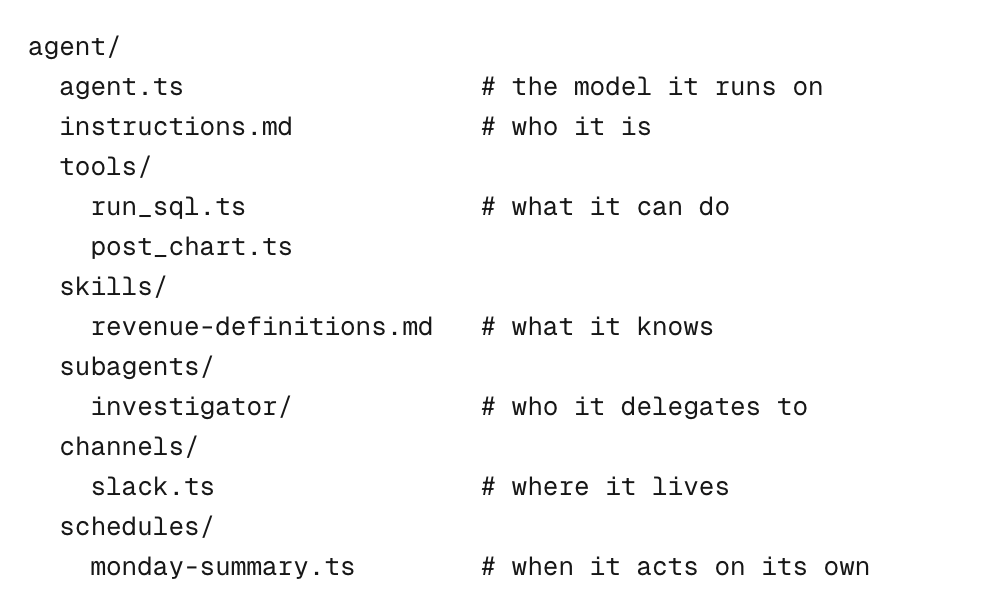
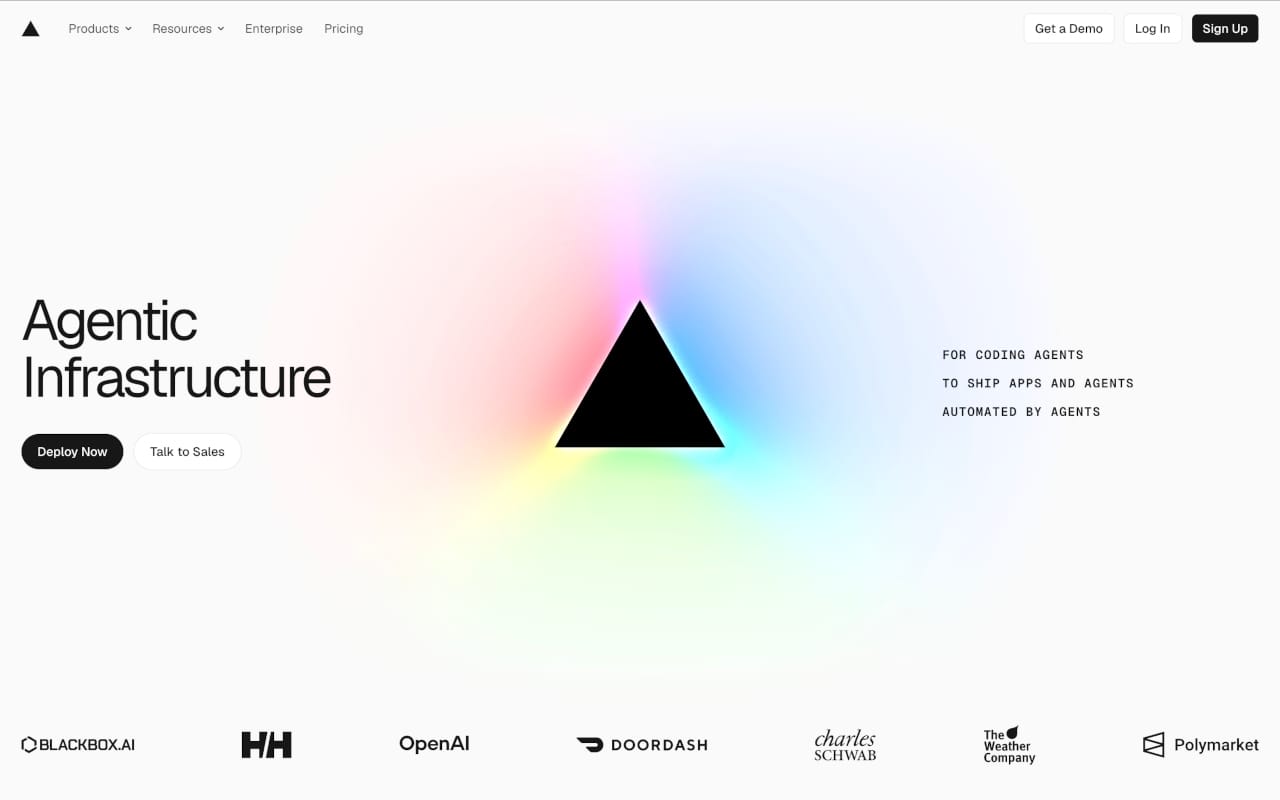
Vercel has been pivoting to an "agentic infrastructure" company for several months — its homepage now explicitly uses that framing — and this is the latest signal that web dev tooling companies are now all-in on agents.
📡 AWS + Adobe connect marketing agents via MCP
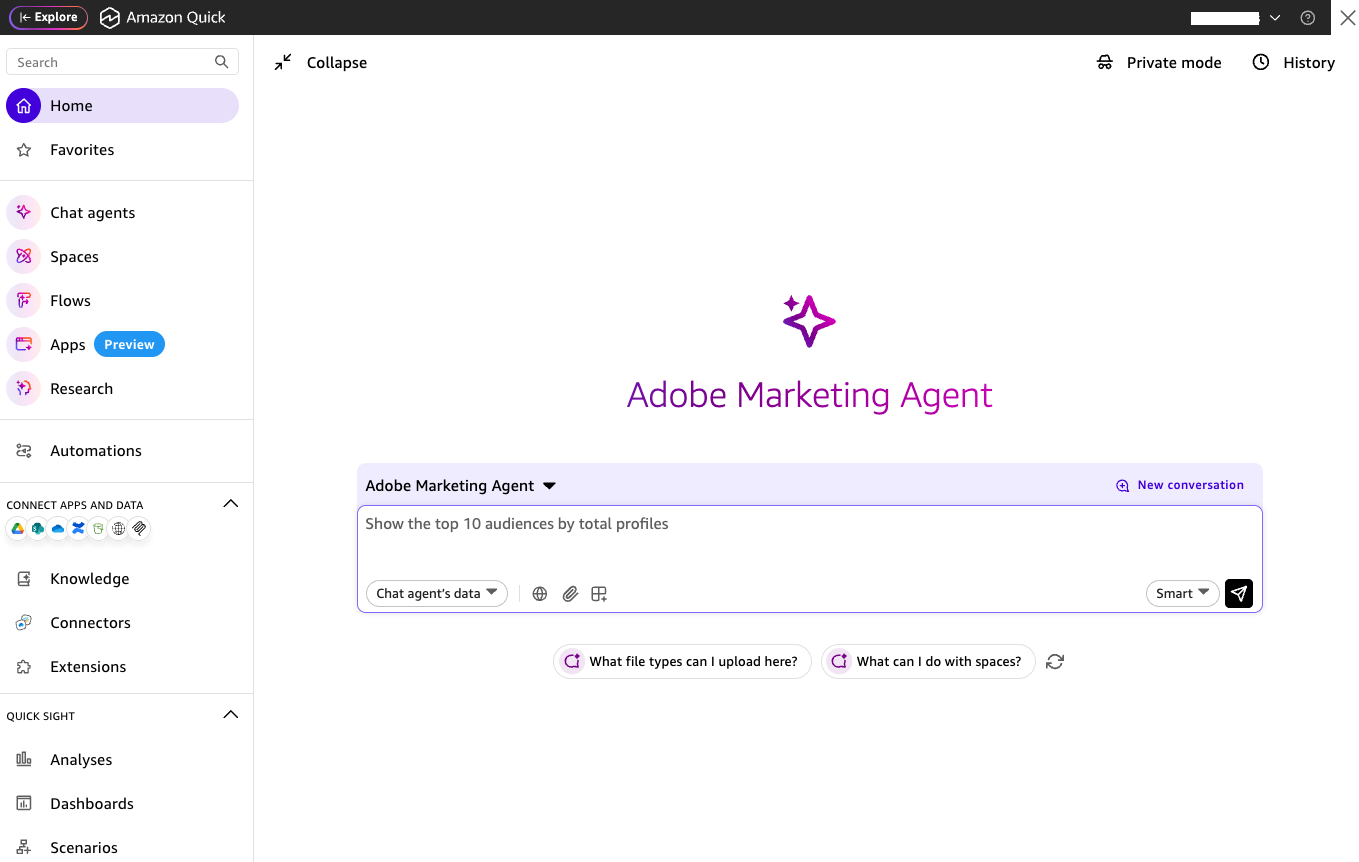
In a good example of enterprise agentic web, AWS and Adobe have connected Adobe’s Marketing Agent to Amazon Quick via MCP — allowing marketing teams to query campaign performance, audiences and customer journeys through natural language. Although this was announced back in April, a new blog post explains how it works in detail.
Quick is part of Amazon's "Agentic AI" suite of tools and is promoted as "an AI assistant for work." Adobe Marketing Agent connects to Amazon Quick and provides marketing-domain context from Adobe systems.
What's most interesting in the latest blog post is getting a look at the architecture, summarized in this graphic:
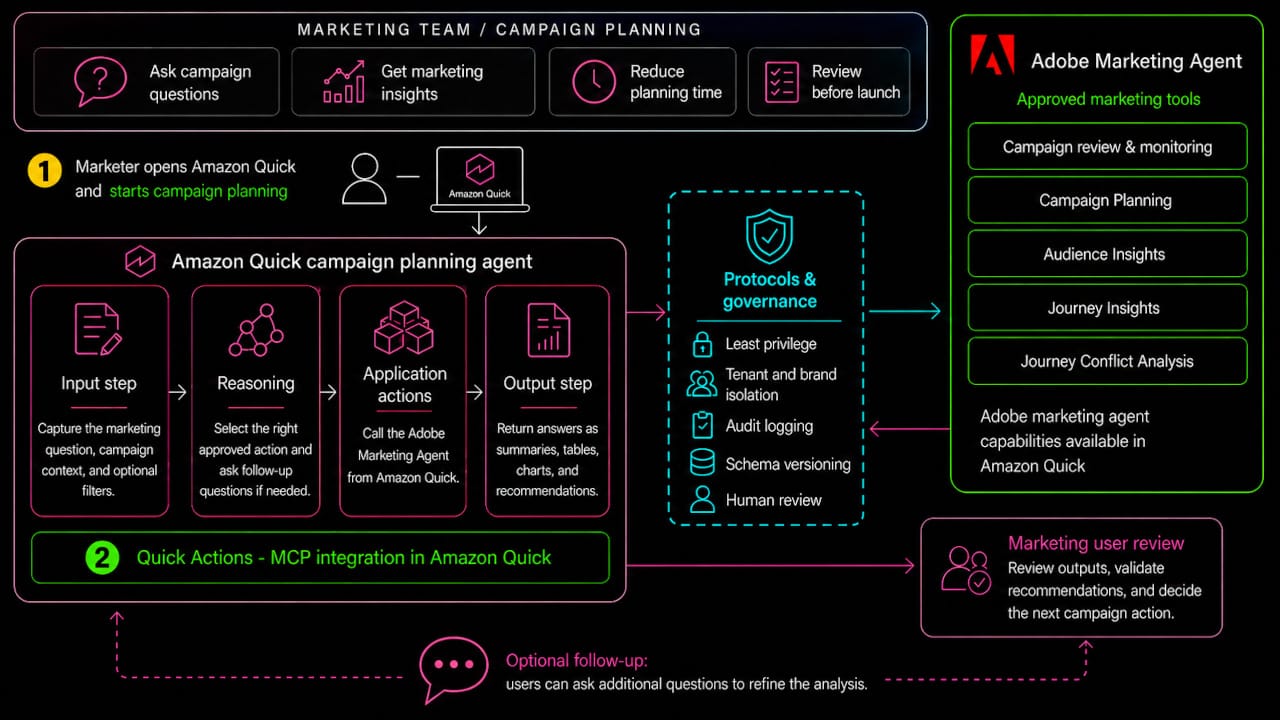
Adobe exposes its capabilities as MCP tools, Amazon Quick discovers and orchestrates them, and governance controls determine how agents can invoke them. It shows once again that MCP is evolving from a developer protocol into enterprise integration infrastructure.
📡 Okta publishes agentic AI identity maturity model
Okta, an identity and access management company, has released an "Agentic AI Identity Maturity Model," which argues that AI agents should be treated as first-class identities, much like employees or service accounts.
In an accompanying white paper, the company outlines a four-stage roadmap for managing AI agents as they scale across the enterprise, from creating a central registry of every agent to implementing fine-grained permissions, continuous monitoring, and automated governance. The paper also addresses the growing use of MCP, calling for OAuth-based authentication, authenticated proxies, and tool-level authorization.
It’s another sign that the agentic internet is moving beyond protocols into the enterprise infrastructure needed to operate agents safely.
📡 Google & others announce an open discovery layer for agents
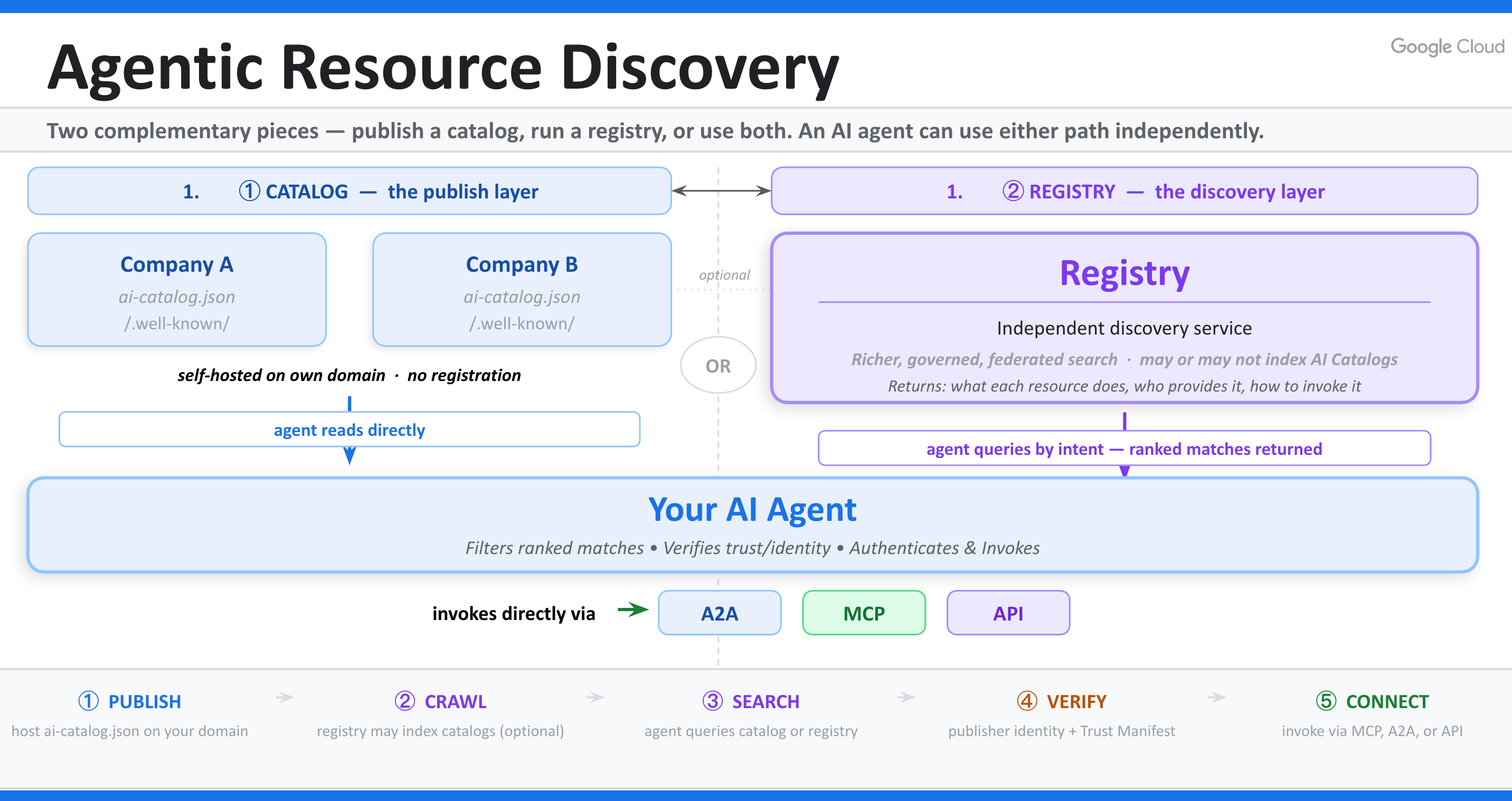
Google and several industry partners have announced Agentic Resource Discovery (ARD), an open specification for finding and verifying tools, skills, MCP servers and other agents across the web.
The aim is to create a discovery layer for the agentic web, where registries act like search engines for machine-callable capabilities. Google explicitly frames it as "the missing layer of the agentic web."
I also liked this framing from R. V. Guha, a Technical Fellow of Microsoft, one of the contributors to the spec. Guha previously created NLWeb, an agentic web protocol released last year that seems to have stalled in momentum. In any case, here's what he said about ARD:
"Discovery is also market making: it lets small publishers be found, lets the agentic capabilities built by the many vendors inside every enterprise be found by that company's own AI assistants, and lets many clients and providers meet in one open ecosystem rather than behind a single gate."
Google's original search engine (I'm talking back in the late-90s and into the 2000s) allowed small publishers to be discovered on the web. Those days, alas, are long gone for small publishers. But I hope ARD can help niche publishers get discovered in the agentic era.
Watchlist
👀 Speaking of the web's future, Automattic's WordPress VIP division has a new online report out, entitled "Future of the Web 2026." One of the statistics: 74% of people surveyed say "the internet feels less human than 10 years ago." That connects back to my blog post at the end of last week, arguing that web professionals shouldn't forget that the web is fundamentally a human network — AI should augment, not replace, people.
Automattic also released a white paper entitled Future-Proofing for the AI-Native Web. While much of it is advertorial, there are some useful insights, e.g.:
"...brands should think about how they can deliver a digital experience that goes beyond teaser-length content, says Christoph Khouri, WordPress VIP’s Head of CMS Product and Engineering. “To make that interesting, you obviously offer more information than AI’s response to a prompt,” he says."
Thanks for reading Agentic Web News — my independent analysis of the companies, standards and ideas shaping the next phase of the web. Alongside weekly market signals, I am publishing interviews with the early builders defining this space.
If this issue helped clarify where the agentic web is heading, please forward it to someone who should be tracking this trend.
To receive future editions, subscribe by email. It's currently free, but you can also become a founding supporter of AWN, to help it become financially viable.
I also advise companies on agentic web strategy, Agent Experience, AI visibility, and agent-facing product strategy. Learn more at ricmac.org.


Comments ()