
My week at the AI Engineer World's Fair
AI Engineer World’s Fair showed how quickly the AI builder ecosystem is scaling, with San Francisco again feeling like the center of a new web-era boom.
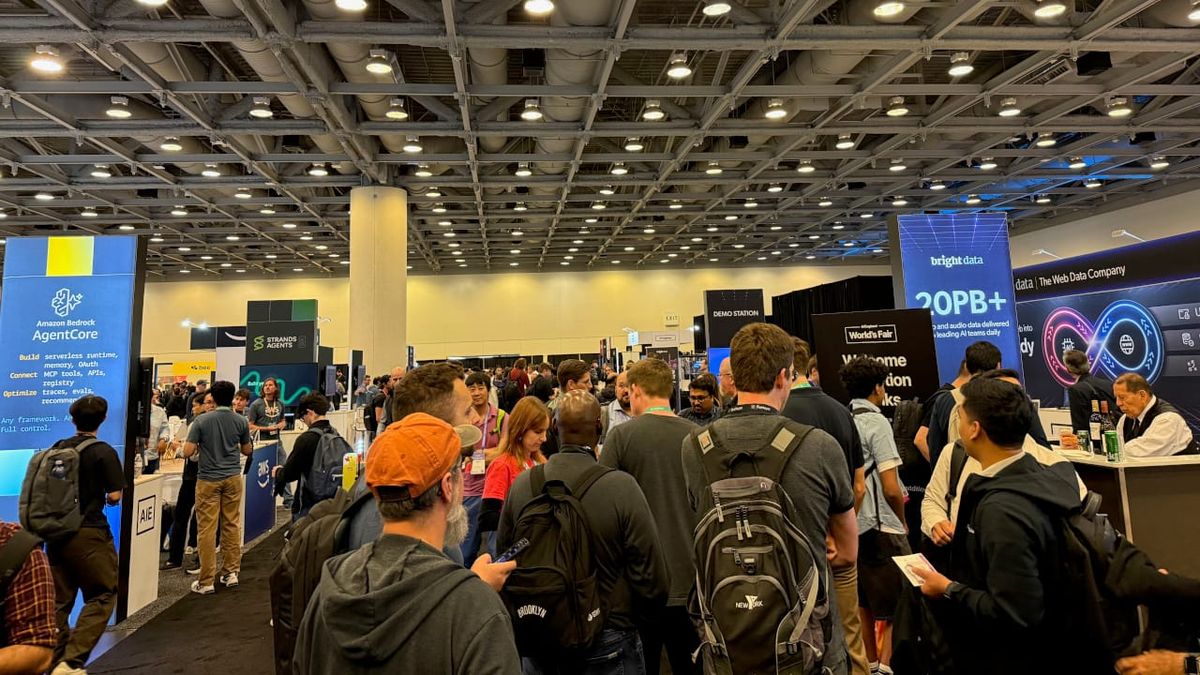
Last week I was in San Francisco covering the AI Engineer World's Fair for Latent Space, the blog of AIEWF co-founder swyx. It was a thrill being on the ground in SF again, and for me it evoked memories of the glory days of Web 2.0. The excitement around AI technology, the speed at which it is evolving, the number of startups being built, and (yes) the hunt for revenue and riches — it's all very reminiscent of two decades ago.
AIEWF had around 7,000 attendees and was held at the cavernous Moscone West Center in SF, so it reminded me of going to the Web 2.0 Expos in the latter half of the 2000s. I'd also attended the very first AI Engineer conference, back in October 2023, which had only 500 attendees. So it was a big step up for swyx and his event team, similar to the scaling of O'Reilly Media's Web 2.0 conferences.
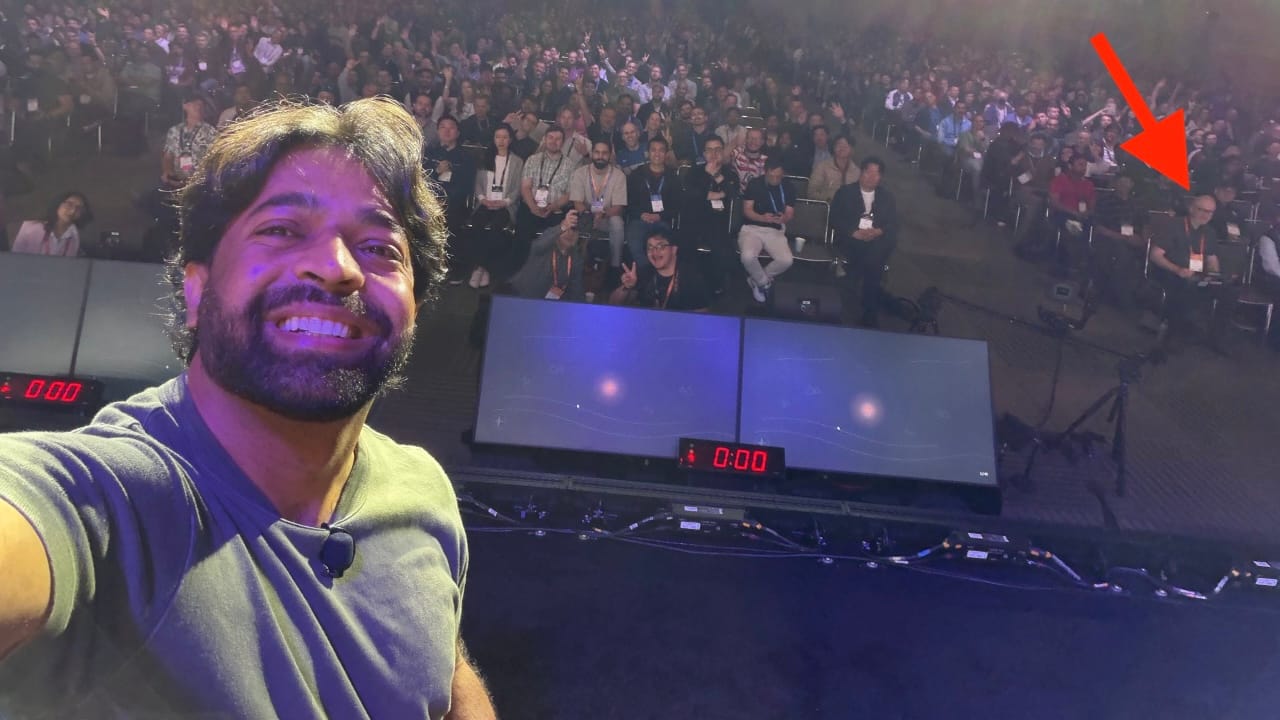
On a personal level, just like in the ReadWriteWeb days whenever I covered conferences, it was an incredibly hectic week of chasing people for interviews, doing the interviews, attending sessions, running between sessions, buying an over-priced salad for lunch (which I took to the media room and ate while I transcribed interviews and did more chasing up), going to more sessions, doing more interviews, seeing people in the hallways and stopping for a chat, and — amid all that — writing up the posts. I remember that being a blur in RWW days, and it was the same at AIEWF 😅
My Latent Space posts
One thing I didn't do at this event, which I had done during the Web 2.0 conferences, was attend the evening parties. Alas, this time round I spent each evening in my SF hotel toom, frantically finishing up my daily dispatch while eating a cold Uber Eats (no disrespect to the no doubt overworked delivery people, but I wish they wouldn't stop multiple times on the way!).
On that note, here are all my articles from AIEWF. If you'd like to get a flavour of each day, I recommend reading each of the 3 daily roundups, in order.
Daily dispatches:
- AIEWF Daily Dispatch 1: Loops, Software Factories & Forward Deployed Engineers
- AIEWF Daily Dispatch 2: Autoresearch and the tension between AI and human agency
- AIEWF Daily Dispatch 3: The great loops debate and the state of AI engineering
Interviews:
- Ahmad Osman on why local AI is catching up
- Forward Deployed Engineers and the future of software engineering
- Warp CEO Zach Lloyd on why software factories are the next phase of coding
- How Cursor deploys AI inside the enterprise
- Autoresearch: The feedback loop behind self-improving agents
- Skill engineering and the case against one-shot AI design
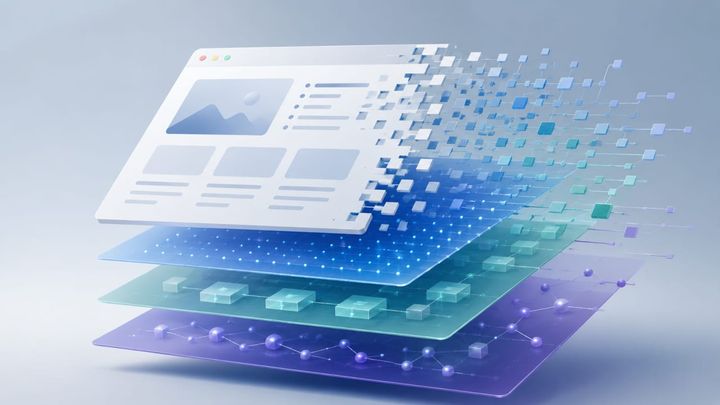
- The website of the future may assemble itself for every visitor
- Vercel's Andrew Qu on why agents are a new kind of software
I loved doing all those interviews. If I had to pick a favorite, it was interviewing Warp's Zach Lloyd on the Expo floor (I met him at the Warp booth, but we had to find a relatively unnoisy spot to talk). I especially enjoyed this interview because I've been tracking Warp since it first started, including an interview in February 2025 while I was at The New Stack. Like many Silicon Valley obsessives, I love a good pivot — and in less than two years, Warp has evolved from a relatively simple CLI tool for engineers into a full-on "software factory" platform. That shift also captured one of the main trends of AIEWF — software factories, which is about managing teams of agents (and humans). I encourage you to read that interview to get a handle on this trend.
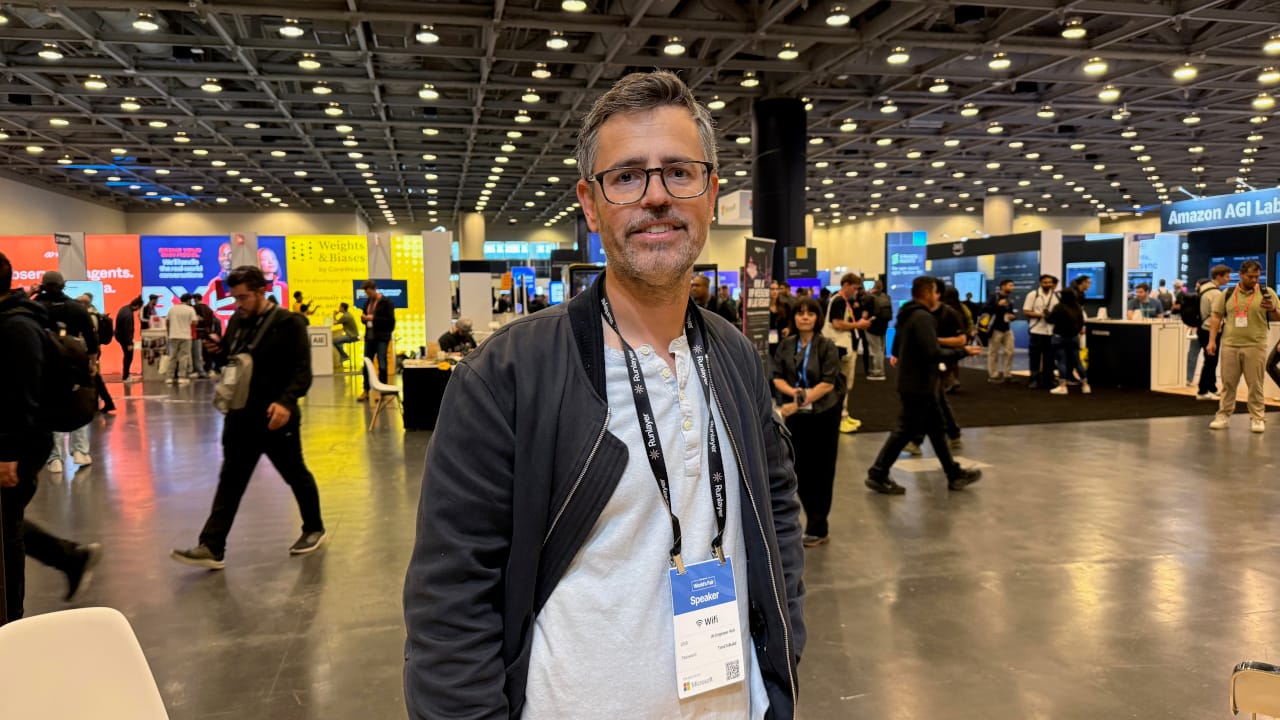
All the folks I interviewed were very passionate about their subject: Sierra's Natalie Meurer and Cursor's Pauline Brunet on Forward Deployed Engineers (such a key trend, especially for enterprise adoption of AI), Introspection co-founder Roland Gavrilescu on autoreasearch, Paul Bakaus on skill engineering, Vercel's Andrew Qu on agent development, Adobe's Carlos Sanchez on agentic websites, and Ahmad Osman on local AI and open source LLMs. I have to add, Ahmad was easily the most passionate engineer I met! My piece on him also made The Daily Context, the daily newspaper produced for AIEWH by the Major League Hacking team — check out their stories on Dev.to.
Btw my interview on Local AI from last week with Latent Space was published on the 2nd page of The Daily Context at AIE pic.twitter.com/nvi7woLkey
— Ahmad (@TheAhmadOsman) July 7, 2026
Agentic Web at AIEWF
A quick note on agentic web topics at AIEWF. Most of the content and discussion at the event was (naturally) focused on engineering topics. So there was a lot to talk about in terms of "loops" (the buzzword at the event), harness engineering, coding agents, software factories, autoresearch, LLM advancements (including open models, like Z.ai's GLM-5.2), and similar topics. So in that respect, AIEWF was much more technical than your typical Web 2.0 Summit or Expo back in the 2000s.
Then again, another theme was that many of these technologies are being used now by product and business people — the FDE trend highlighted this — and so I felt there was a lot of business interest in AIEWF too.
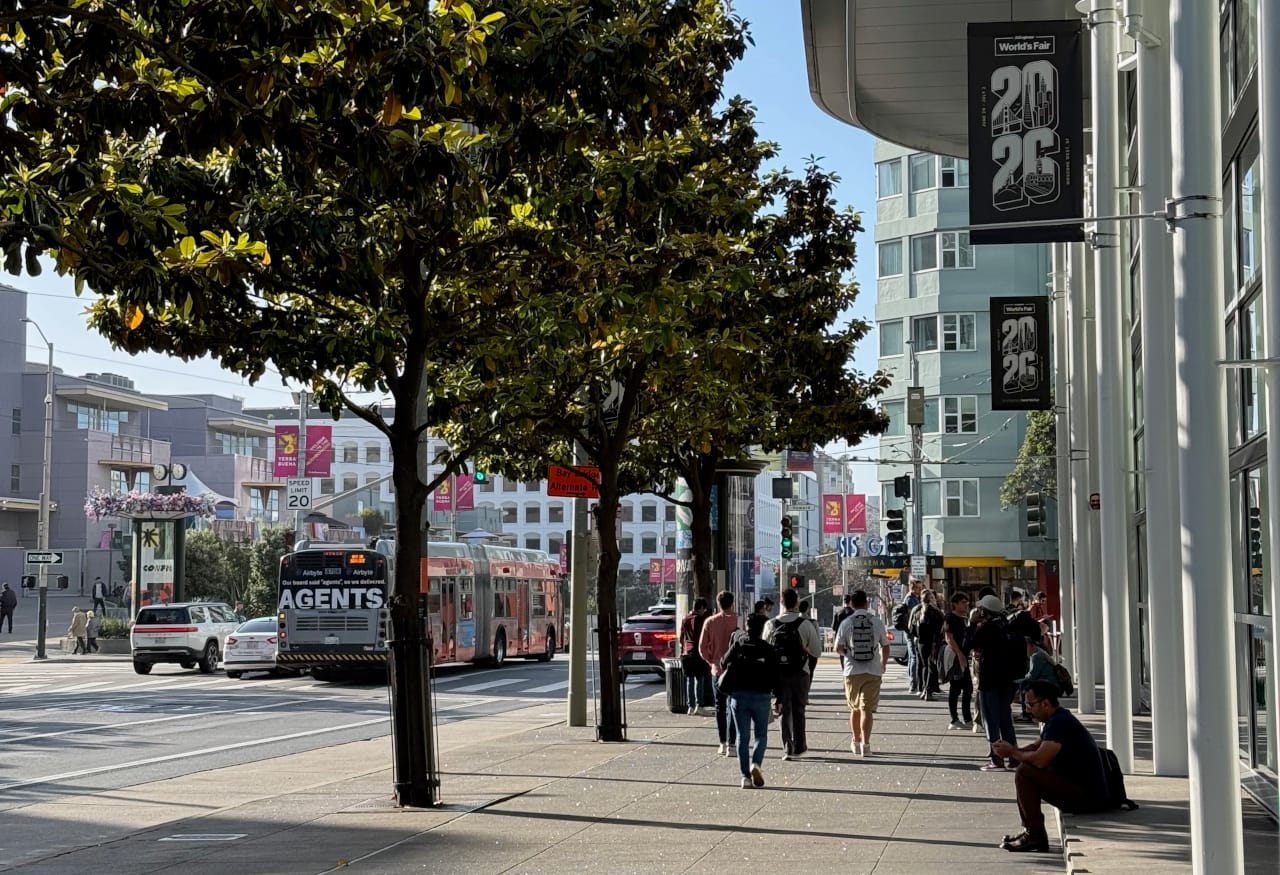
But regarding agentic web specifically, which has been the topic of this newsletter, it was present if you knew where to look. My interviews with Vercel and Adobe highlighted some of the themes I've been exploring here, although it was also clear that Adobe is still at an experimental stage. I'm actually very impressed with where Vercel is at in terms of providing tools and a framework for agentic web development, so I'd recommend reading my interview with Andrew Qu.
Other than that, agentic web was present in some of the sessions — for example Liad Yosef and Ido Salomon's MCP Apps session (I'd previously interviewed both for AWN, and they covered similar themes in their session).
Liad's new startup, Ora, was getting some buzz at AIEWF, which I was pleased to see.
Earlier this week at @aiDotEngineer World's Fair, our CTO, @liadyosef, presented findings from our real agent journeys research.
— ora (@oradotai) July 4, 2026
As agents increasingly become the interface between people and products, many of the assumptions we've made about agent readiness become irrelevant. pic.twitter.com/Tcs3zisf1p
Watch the devs
One learning (or reinforced learning!) from AIEWF that I'm going to apply to my ongoing agentic web research: the developer community is driving almost all the innovation in AI currently. It's not called the AI engineer conference for nothing. For all the noise around the SEO community and agentic web, which this newsletter has looked at recently, my sense is that there isn't yet a market fit for what I've been terming "agentic web." Partly that's due to the existential issues surrounding the web ecosystem at this time, which I've written about before. But more than that: it's AI engineers that are building the future, not SEO experts.
It all comes back to a lesson I had learned even before Web 2.0 took off: it's all about watching carefully what developers are building and then reporting on that. Tim O'Reilly built his whole career and business around that insight, and so did I — on a lesser scale, of course. So I came away from the AI Engineer World's Fair with a determination to (re)focus deeply on what engineers are building and exploring in this new agentic era.
Stay tuned for my AIEWF wrapup post, coming very soon on Latent Space. I'll be reviewing the five biggest tech trends I took from the conference.
Comments ()