
Agentic web market signals: the machine-readable web becomes a business problem
Bot traffic, grounding APIs, atomic brand systems, and CMS deals point to a new commercial layer forming around AI agents.
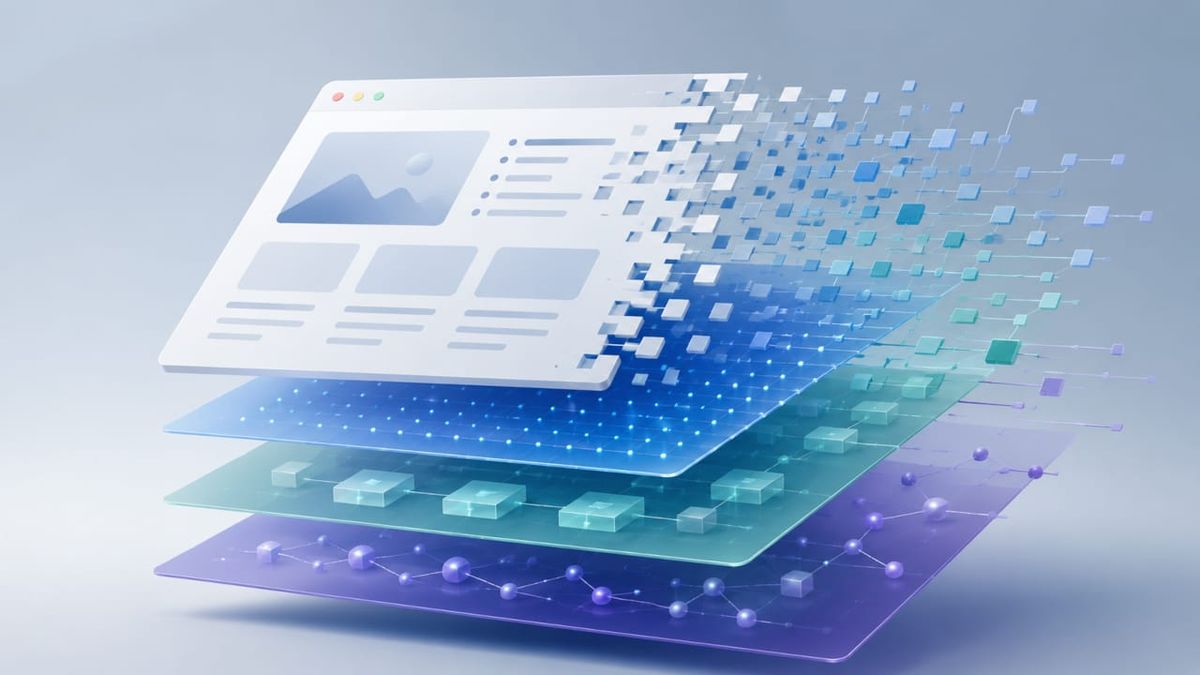
This year I've been writing about how we're moving from a web of pages to a web of capabilities. To me, that's never meant that the human web we all know and love is going away. Clearly I don't think that, otherwise I wouldn't have started a new tech blog. Rather, the point I've been trying to make is that there's an extra layer of the web emerging — one that is built for our machine helpers.
Perhaps this narrative has been difficult for people to get behind, because so far I've been focusing on what many would see as abstract signals. The new protocol WebMCP, for example — which enables you to define a set of programmatic capabilities on your website for agents to use — has incredible potential, but it's not yet widely implemented in browsers.
Well, over the past week I have identified several stories that prove the business world is adapting to AI agents. It's not just a protocols narrative anymore. The stories I'll cover in this week's market signals show how the web is being re-architected for machines at three levels: traffic, search / real-time data, and brand / commercial interaction. In addition, I have a story about how the content management market has clearly shifted due to the demands of agents.
Market Signals
📡 Cloudflare: machine demand is now measurable
You probably saw the tweet by Cloudflare CEO Matthew Prince, but what does it actually mean for builders and entrepreneurs? Here's what Prince wrote:
"Welp, that happened faster than I predicted. Thought it would be end of 2027, then early 2027, but agentic traffic growing so fast that bots have now passed human traffic online for the first time in the Internet's history."
And here's the data he linked to (as of time of writing):
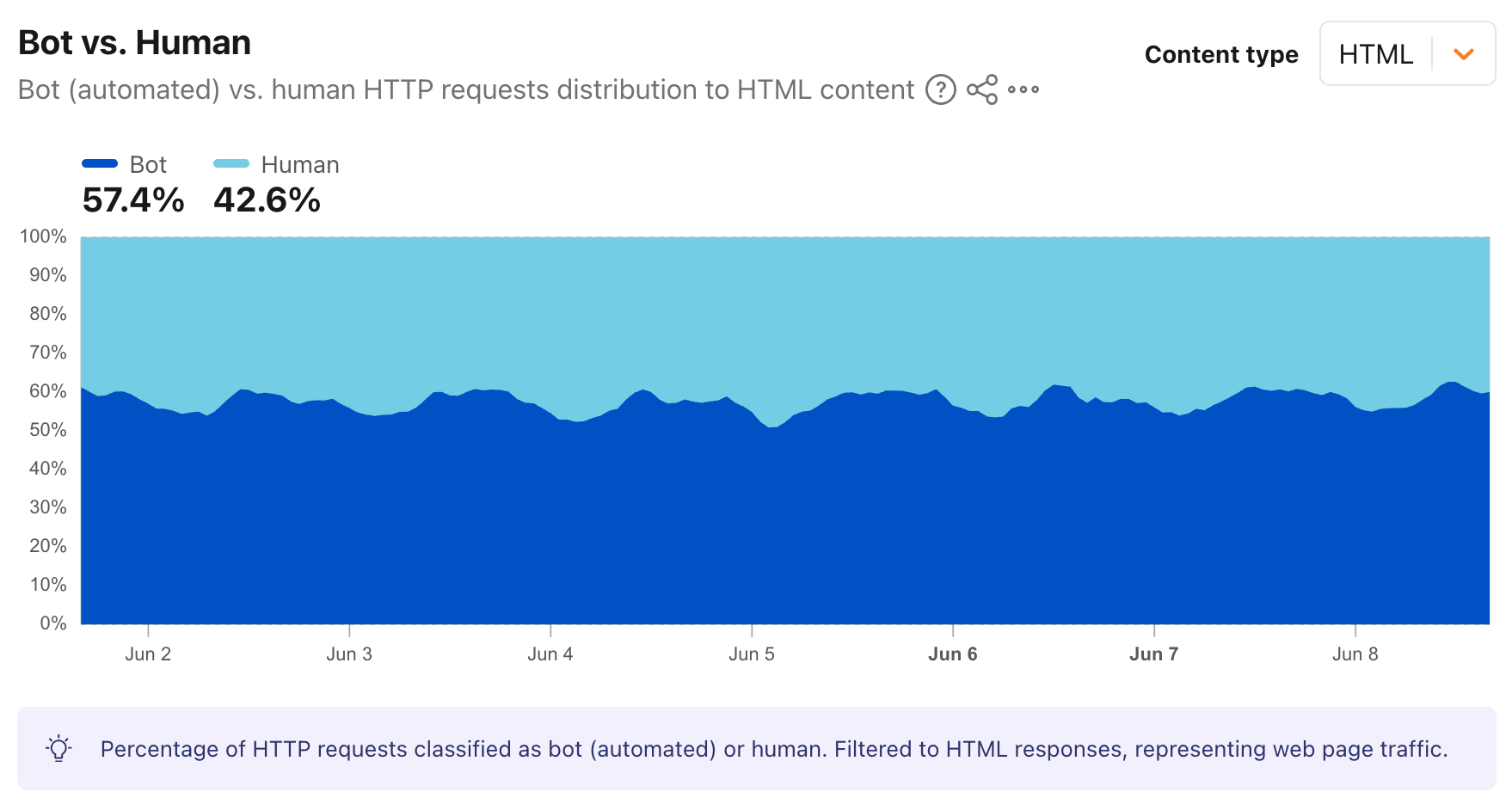
There is one important caveat here: HTTP requests are not the same as human attention, engagement or time spent. That said, this really is a key statistic, because it shows that websites are facing a large and growing machine demand. And if there's demand...well, that creates a market.
The bigger trend to watch is how this will change the business model of the web going forward. (In)famously, the old web monetized human attention — first with 'dumb' banner ads, and then targeted advertising based on user profiling and social media activity. But the agentic web won't be about attention. Instead, it will have to find a way to monetize access, permission, attribution and action. All of which is in the wild west stage right now.
📡 Microsoft Web IQ: search becomes grounding infrastructure
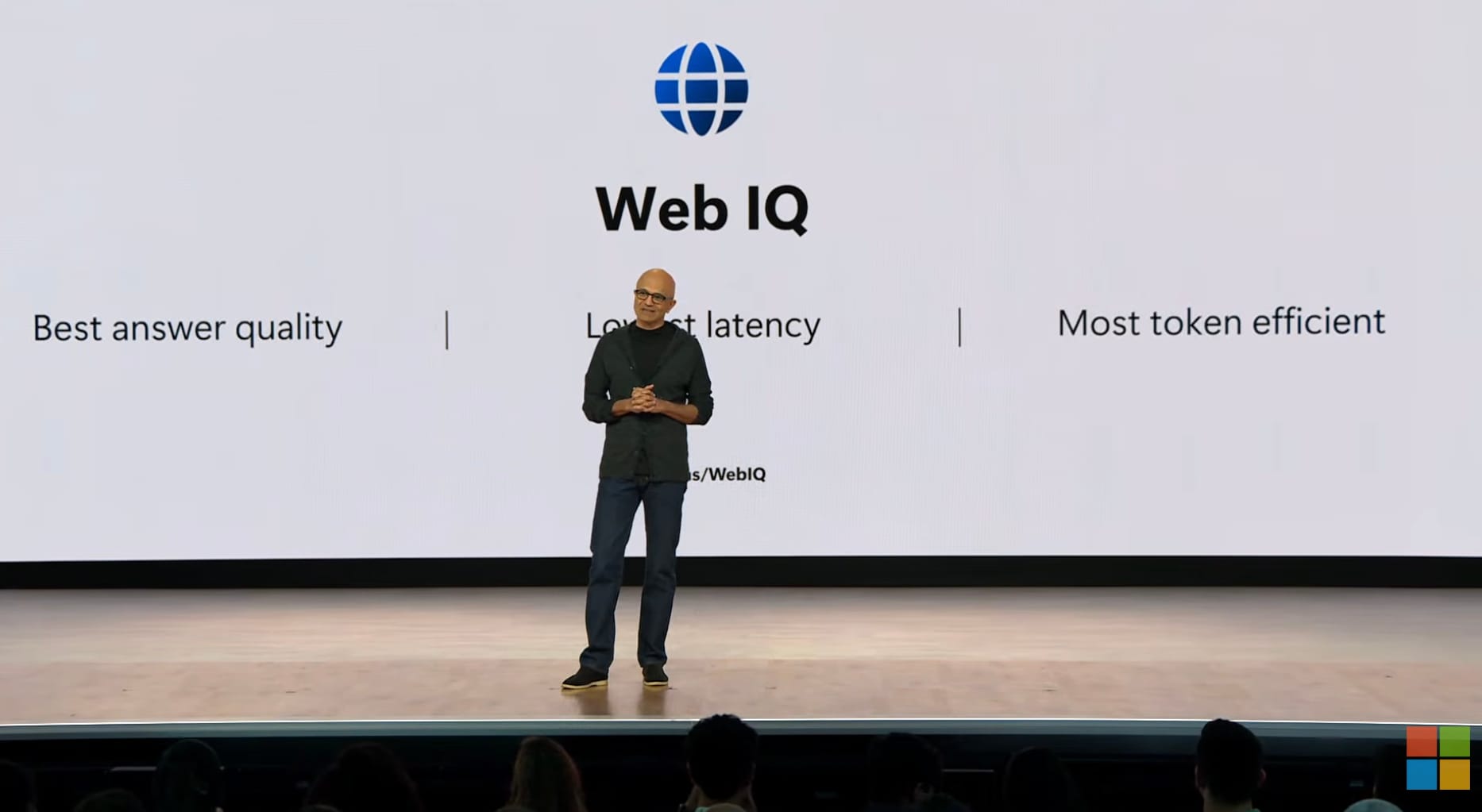
It's conference season among the big tech companies, and last week was Microsoft's turn with its annual Build event. There wasn't a lot of web-focused news, in all honesty, since the main theme of the event was that Windows is now a platform for agents as much as for humans. But at one point in his keynote, CEO Satya Nadella talked about a new product marketed as "Web intelligence for the agentic era." This was Web IQ, "a search engine for AI systems."
Web IQ re-positions web search as an AI-native grounding layer for agents, not just a destination for human queries. The key word here is "grounding," which was repeated 20 times in the media release. The basic idea is that while classic search helped humans choose which page to visit, agentic search helps machines decide what to say, cite or do.
This paragraph in the announcement blog post stood out to me:
"The agentic web will be built by systems that can reason against the world as it actually is: fresh, contested, and constantly changing. That requires more than a model with a search tool attached. It requires a grounding layer engineered for the speed, quality, and economics of inference-time retrieval, built on a foundation the open web can trust."
Whether Bing can become the primary grounding layer going forward is an open question, but certainly I think this is the right framing for agentic search.
📡 Atomic brand kits: brand identity becomes machine-readable
If your website is becoming machine-readable, shouldn't your brand do that too? That was the thesis of a thought-provoking article by Emmett Shine, founder of a New York design studio called Little Plains. Shine opened his long article by describing the deliverable his design studio had recently sent off to a client:
"Last week we sent a founder a zip file containing two folders: /human, /agent, & a readme.md. After a month of work, inside the agent folder, their entire brand was encoded as instructions via YAML, JSON, Markdown, HTML, CSS, SVG files. Upon receipt, they dropped the packet into Cursor, typed a prompt, and had a near-complete landing page that day."
Traditionally, an agency like Little Plains would deliver assets like logos and style guides to their clients. And while those things are still in the /human folder, the suggestion is that brand systems will increasingly need a whole other set of assets in order to be legible to agents.
brand_atomic_system/
├── readme.md
├── magic_trick.md
├── human/                     ← drop PDF brand guidelines here
└── agent/
    ├── verbal/
    │   ├── positioning.md
    │   ├── audience.yaml
    │   ├── messaging.md
    │   ├── differentiation.md
    │   ├── concepts.md
    │   └── voice.md
    └── visual/
        ├── colors_and_type.css
        ├── fonts/              ← 5 OTFs
        ├── assets/             ← logo + brand assets
        ├── components/         ← 11 UI primitives
        ├── tokens/             ← 25 token specimens
        ├── motion/             ← full motion system (JSON, CSS)
        └── artifacts/
            ├── web/
            └── product/
"The shape of every kit we ship now." Emmett Shine, Little Plains.
The "atomic kit" idea treats a brand almost like a software program that agents can run: a "structured, machine-readable understanding of what the brand is, who it's for, how it sounds, and how it looks." The implication is that agents could use this kind of kit to generate brand-consistent pages, interfaces and content across contexts the brand does not fully control.
This is fascinating, even more so because web technologies (HTML, CSS, SVG files) are at the core of these agentic brand assets.
📡 Salesforce + Contentful: the CMS becomes agent infrastructure
In Content Management System (CMS) news, this past week Salesforce entered into an agreement to acquire Contentful, probably the leading "headless" CMS platform.
It seems like a lifetime ago, but in the early years of the 2020s (pre-AI), so-called "headless CMS" systems were all the rage. As I defined it in a 2022 article:
"In a headless CMS, the frontend (aka the head; meaning presentation and publishing) is decoupled from the backend (the content) and managed outside of the core system."
As I noted in that article, the big CMS players — like WordPress and Drupal — had begun to offer headless versions of their products. We also saw web infrastructure companies like Netlify offer "composable" platforms, playing on the same idea. But the trend had been started and driven by smaller players like Contentful and Strapi (which I profiled in 2020).
Fast forward to 2026 and it turns out AI systems are less dependent on the traditional "head" of a CMS — they primarily want the backend data. So we have Salesforce, an enterprise IT behemoth, buying a headless CMS so that Agentforce (its agent platform) can "dynamically assemble and deliver personalized experiences across every channel, at the speed and scale the AI era demands."
Watchlist
👀 The Economist launches ChatGPT app
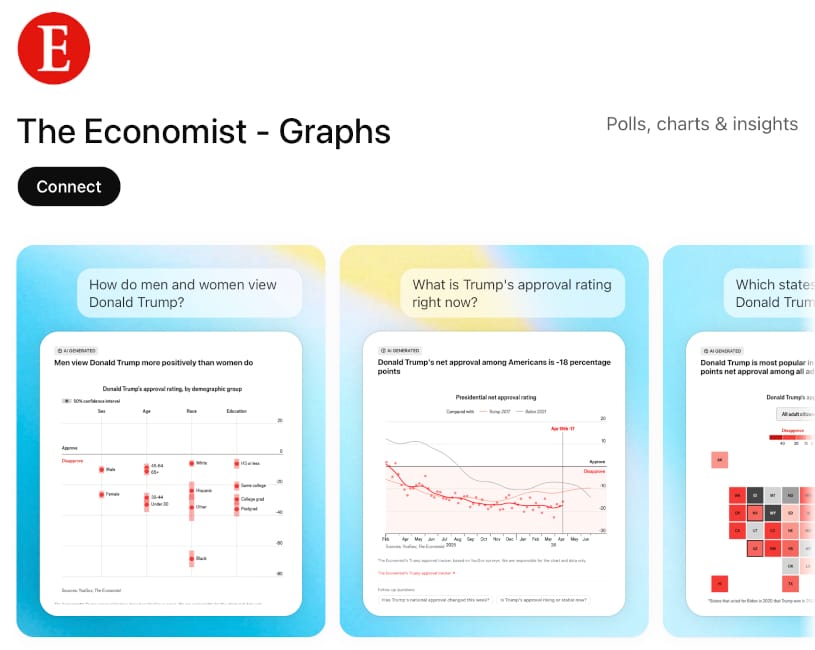
Here's an example of a media company experimenting with an AI chatbot app; which, frankly, is a type of app that hasn't yet gained major traction. The Economist's ChatGPT app has a very specific purpose: to visualise data from its Trump tracker. As NiemanLab reported, the app is experimental and The Economist "hopes the app will build brand awareness among younger audiences."
When OpenAI announced its ChatGPT app platform last October (which it subsequently launched in December), I was most intrigued by the fact that it had a web-based UI model. Since then, I've been hearing that apps within ChatGPT haven't really gained a foothold — it's just much easier at this point in time to use a brand's native app, or indeed its website. But I still think we'll see apps within AI chatbots grow over time — probably adding more "generative UI" (on-demand, personalized UI) as that technology becomes more viable.
Thanks for reading Agentic Web News — my independent analysis of the companies, standards and ideas shaping the next phase of the web. Alongside weekly market signals, I am publishing interviews with the early builders defining this space.
If this issue helped clarify where the agentic web is heading, please forward it to someone who should be tracking this trend.
To receive future editions, subscribe by email. It's currently free, but you can also become a founding supporter of AWN, to help it become financially viable.
I also advise companies on agentic web strategy, Agent Experience, AI visibility, and agent-facing product strategy. Learn more at ricmac.org.


Comments ()